

National single window promises simpler Trade in Nigeria as Stakeholders meet in Lagos
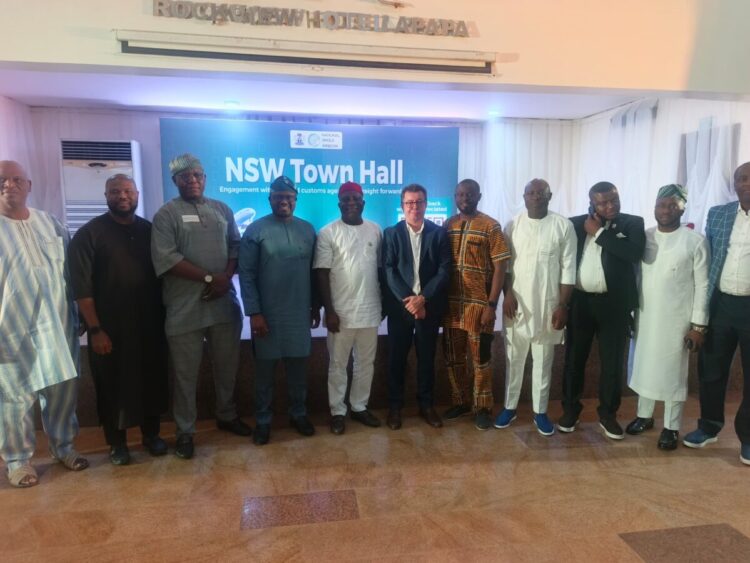
 National Single Window promises simpler Trade in Nigeria as stakeholders meet in Lagos
By Babatunde Aremu
The National Single Window (NSW) project has promised to simplify Nigeria’s import and export processes, reduce delays, and eliminate the need for multiple document submissions at ports.
The assurance was given on Tuesday in Lagos during a town hall meeting with members of the Association of Nigeria Licensed Customs Agents (ANLCA), where stakeholders were briefed on how the platform will work and what to expect when it goes live in the coming weeks.
Speaking at the event, Mr. Tola Fakolade, Director National Single Window project, explained that the initiative was conceived in line with global best practices championed by the World Trade Organisation (WTO) and the United Nations Commission on International Trade Law (UNCITRAL). He recalled that the idea gained momentum around April 16, 2024, with a clear objective: to make Nigeria’s import and export processes easier, faster, and less cumbersome for traders, customs brokers, licensed agents, and freight forwarders.
“The whole objective is how do we make import and export processes simpler for you,” Fakolade said. “The idea is that you will use only one platform for everything you need to do when it comes to import and export.”
According to him, the current system, despite some technological improvements across agencies, still forces users to log into multiple platforms to process permits, declarations, and other documentation.
“What we are doing now is bringing all of that into one platform,” he explained. “You log in once, complete everything you need to do on one platform, and submit all your documents only once. You don’t have to keep re-uploading your bill of lading and other documents on different systems.”
Fakolade said the NSW is designed to drive simplification, reduce duplication, cut delays, and make trade procedures more transparent and efficient for importers and their agents. He noted that the project has been developed over the last 18 months in collaboration with key stakeholders, including ANLCA, which he described as a major partner, adding that the association’s leadership has been very supportive of the initiative.
With the platform scheduled to go live before the end of the quarter, Fakolade said the town hall meeting was organised to ensure users clearly understand what is coming, how it will affect their daily operations, and how to prepare for the transition.
“We want to make sure there is clarity and proper understanding of what is going to change from the day we launch,” he said. “We also want to work together to ensure a successful launch.”
Also speaking at the event, the President of ANLCA, Mr. Kingsley Emenike Nwokeoji, welcomed the initiative, describing it as a long-overdue step towards ending the duplication of documents and multiple submissions that have plagued cargo clearance in Nigeria.
“What we are seeing so far is the political will of the present government to put an end to this multiplication of documents and submission of documents,” Nwokeoji said. “This programme is going to help us cover the functions of so many agencies of government.”
He pointed out that importers often deal with situations where a single product is regulated by two or even three government agencies, leading to repeated submissions and delays.
“With the single submission, whoever is raising any objection will do so on the same platform, and others will see why the cargo or process is being stopped. This will also help in time release,” he added.
Nwokeoji assured the project team of ANLCA’s support, praising the professionals driving the initiative and expressing confidence that the NSW would deliver the much-expected relief for practitioners.
“This will bring the relief we have been expecting, so that we can submit documents from the comfort of our offices and monitor the movement of our cargo,” he said.
However, he also raised key operational questions, particularly about the phased implementation of the system and its interaction with existing platforms. He noted that the system would initially run side-by-side with the current platform and called for clear guidance on how that transition would work in practice.
He also sought clarification on the phase where duties would be accessed through the Single Window and what that would mean for the role of Customs units such as the ODO group.
In addition, the ANLCA president stressed the importance of training and user support, urging members to take advantage of available training centres across different locations to avoid the kind of confusion that often follows major system changes.
“We have gone through some of these transitions before. When some of us did not react early enough, we started running helter-skelter after launch,” he warned.
Members of the association also raised concerns during the interactive session, including fears of sabotage, possible network issues, manpower and skills gaps, and the integration of the Nigeria Customs Service’s B’ODOGWU system into the new platform.
Responding, Fakolade acknowledged that the National Single Window would not solve all challenges immediately at launch but insisted that it establishes a framework for sustained improvement and requires collective collaboration to succeed.
“We are laying the right foundation and putting the right processes in place,” he said. “The day we launch, we are not saying all issues in the import and export ecosystem will disappear. But it’s about starting the journey and ensuring that we all work together to drive adoption of the system.”
According to him, the NSW will offer a single interface for traders and agents, data harmonisation, improved transparency, e-payment, and centralised risk management.
On concerns about network reliability, Fakolade disclosed that support centres equipped with multiple internet service providers would be rolled out across major ports in the country. He said this is part of broader efforts to reduce clearance costs and curb the diversion of Nigeria-bound cargo to neighbouring countries.
The Lagos town hall meeting ended with a renewed call for collaboration between government and the private sector, as both sides prepare for what is expected to be a major shift in the way trade is conducted at Nigeria’s ports. Stakeholders expressed optimism that, if successfully implemented and widely adopted, the National Single Window could mark a turning point in Nigeria’s quest for a more efficient, transparent, and competitive trade environment.