

FG REFORMS: NIGERIAN PORTS RECORD 12.3% RISE IN CARGO THROUGHPUT, VESSEL TRAFFIC UP 14.4%

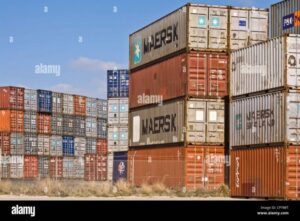 FG Reforms: Nigerian Ports Record 12.3% Rise in Cargo Throughput, Vessel Traffic Up 14.4%
.Outward cargo rises 22% as transshipment traffic gains momentum
.Container traffic hits 602,392 TEUs, vehicle traffic up 18.3%
By Babatunde Aremu
The federal government’s reform of the nation’s maritime sector has started to the necessary fruits as the Nigerian Ports Authority (NPA), recorded growth in cargo throughput, vessel traffic, container movements, vehicle traffic among others in the second quarter (Q2) of 2026.
This was contained in the NPA Operational Performance Report for the Second Quarter of 2026, which revealed an overall improvement in operational activities.
Analysis of the report showed that most of the key performance indicators recorded positive growth, reflecting sustained increases in vessel traffic, cargo throughput, container movements and port utilisation.
“The increase in cargo volumes and ship calls underscores the continued resilience of the nation’s seaports to facilitate trade and be more competitive,” said Managing Director of the NPA, Dr Abubakar Dantsoho while commenting on the stelar performance.
A breakdown of the report showed that cargo throughput increased by 12.3 per cent, from 31,825,592 metric tonnes recorded in Q2 2025 to 35,740,362 metric tonnes in Q2 2026.
An analysis of cargo throughput by type of trade showed that inward cargo accounted for 56.8 per cent of total cargo handled, while outward cargo represented 41.9 per cent.
Transshipment cargo contributed 488,364 metric tonnes, representing approximately 1.4 per cent of total cargo throughput.
The report further stated that inward cargo increased by 7.7 per cent, while outward cargo recorded a 22 per cent increase, “demonstrating improved export performance during the period under review.”
The number of ocean-going vessels completed increased from 1,050 in Q2 2025 to 1,201 in Q2 2026, representing an increase of 14.4 per cent.
Similarly, the Gross Registered Tonnage (GRT) of ocean-going vessels increased from 40.87 million tonnes to 49.95 million tonnes, representing a growth of 22.2 per cent.
Service boat operations also increased during the quarter.
The number of service boats completed rose by 22.3 per cent, from 3,554 to 4,347, while the associated Gross Registered Tonnage increased by 62.4 per cent, from 1.06 million tonnes to 1.73 million tonnes.
Container traffic increased by 11.3 per cent, rising from 541,229 TEUs in Q2 2025 to 602,392 TEUs in Q2 2026.
The report stated that inward laden containers increased by 6.3 per cent, accounting for approximately 51.5 per cent of total container traffic.
Outward laden containers declined marginally by 3.9 per cent, while empty container traffic increased by 13.9 per cent compared with the corresponding period of 2025.
Transshipment container traffic stood at 29,038 TEUs, compared with no recorded movement during the corresponding period of 2025.
This, the report said, reflects the growing importance of transshipment operations within the Nigerian port system.”
Also, Vehicle traffic increased during the period under review.
A total of 44,147 units were handled in Q2 2026 compared with 37,306 units recorded in Q2 2025, representing an increase of 18.3 per cent.
The report said the increase was indicative of improved automobile import activities attributable largely to a stability of exchange rate.”
The report identified the continued growth in transshipment traffic as a development within the Nigerian port system.
It stated that “The emergence and continued growth of transshipment traffic continues to position Nigerian ports as an emerging regional transshipment hub. The on-going Port Modernisation if completed with the sustained investment in infrastructure and commercial engagement with shipping lines will further enhance this opportunity.”
Overall, the report stated that positive growth was recorded across most operational indicators, particularly cargo throughput, vessel traffic, container traffic and vehicle traffic.
“The Second Quarter of 2026 recorded encouraging operational performance across the Nigerian ports, with sustained growth in ship traffic, cargo throughput, container movements, vehicle traffic, and berth utilisation,” it stated.
Commenting further, Dantsoho sad the NPA’s core priority for 2026 is a massive infrastructure overhaul, complemented by digital reforms and operational efficiency improvements. Stakeholders should expect visible progress on the ground, starting with the groundbreaking of the port modernisation projects.
“The centerpiece is the modernisation of Apapa and Tin Can Island ports. The NPA notes both are outdated—Apapa is nearly 100 years old and Tin Can over 50. NPA is also supporting the Lekki and Badagry deep-sea projects to handle larger vessels and revitalising Eastern Ports to reduce Lagos congestion. NPA is prioritising the full implementation of the Port Community System (PCS) to streamline operations and reduce manual bottlenecks. This integrates with the National Single Window (NSW) (operational since Q1 2026) to create a unified digital trade ecosystem.
“The authority is enhancing technology-driven security for 24-hour operations and strengthening collaboration with customs agents to tackle congestion and improve cargo evacuation. NPA is positioning Nigeria as West Africa’s trade nerve The expected impact includes faster operations, lower logistics costs, increased trade volumes, and improved export competitiveness,” he added.