
LAGOS NUJ LECTURE: EX- NIMASA DG, DAKUKU PETERSIDE TASKS MEDIA TO EMBRACE INVESTIGATIVE JOURNALISM, HOLD PUBLIC OFFICIALS ACCOUNTABLE
Lagos NUJ Lecture: Dakuku Peterside Tasks Media to Embrace Investigative Journalism, Hold Public Officials Accountable
By Babatunde Aremu
Former Director-General of the Nigerian Maritime Administration and Safety Agency (NIMASA), Dr. Dakuku Peterside, has tasked the media with embracing investigative journalism and holding public officials and institutions accountable for their actions.
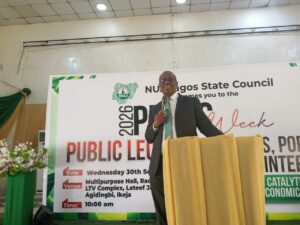
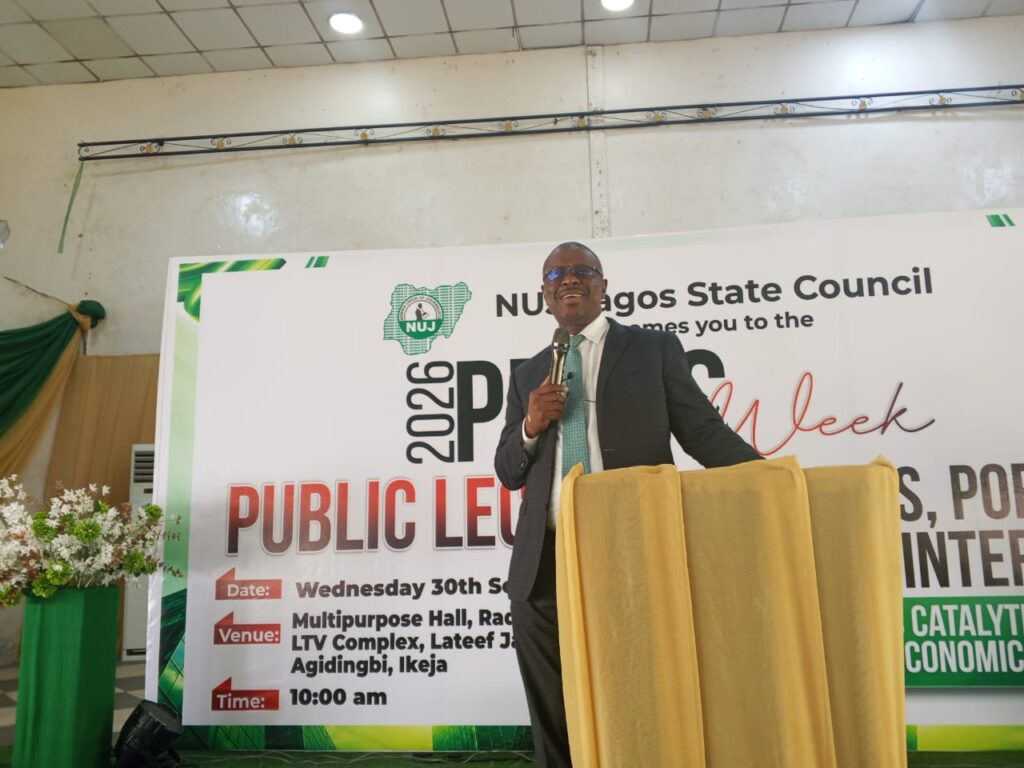
Peterside made the call on Wednesday while delivering a lecture at the Lagos State Council of the Nigeria Union of Journalists (NUJ) Annual Lecture, where he examined the relationship between politics, port operations and the media, as well as their implications for Nigeria’s economic development.
Speaking on the theme of the lecture Politics, Ports and the Public interest, Mr. Peterside who was Guest lecturer at the lecture said the media must move beyond merely reporting events and official statements to interrogating policies, investigating systemic challenges and providing citizens with information capable of influencing positive institutional change.
According to him, Nigeria’s seaports should not be viewed solely as gateways for cargo and revenue collection, but as critical engines of economic growth whose efficiency directly affects businesses, consumers and the wider economy.
Peterside noted that port operations have a direct bearing on the cost of living, as delays, high freight costs and demurrage charges are eventually transferred to consumers through higher prices of goods.
He said political decisions also play an important role in the maritime sector, particularly in the appointment of port administrators, infrastructure investment and the structure of port concessions.
The former NIMASA boss stressed that political decisions must be supported by effective governance, accountability and operational efficiency if Nigeria is to achieve sustainable economic growth.
He expressed concern over prolonged delays, excessive documentation and other bottlenecks within the port system, saying such challenges could undermine Nigeria’s competitiveness and affect the export of agricultural and other products.
The Guest lecturer urged journalists covering the maritime sector to look beyond revenue collection figures and investigate how port inefficiencies affect manufacturers, farmers, importers, traders, transport operators and other businesses.
He said the media should use data and investigative reporting to expose gaps, interrogate policies and demand explanations from relevant public institutions and private operators.
“Politics without functional ports remains an abstraction, ports without accountability pose an economic risk, and reporting without economic literacy results in noise rather than constructive scrutiny,” he said.
Peterside identified the transformation of seaports into genuine engines of economic growth, effective governance and stronger media accountability as critical issues that should shape Nigeria’s port reform agenda.
He also cautioned that ambitious economic targets, including the aspiration to build a $1 trillion economy, would remain difficult to achieve without a clear strategy, resilient institutions, modern infrastructure, improved productivity and effective accountability mechanisms.
According to him, ports should be regarded as the “economic circulatory system” of the country because they facilitate the movement of raw materials, machinery and other inputs required for industrial production, while also connecting Nigerian businesses and farmers to international markets.
He said the real measure of port performance should therefore go beyond revenue generated and cargo throughput to include the economic activities and opportunities enabled by efficient port operations.
The former NIMASA Director-General further recalled that sustained media scrutiny had historically contributed to government action and major reforms in the maritime sector, including the 2006 port concession programme.
He therefore called for renewed media attention to operational efficiency, institutional accountability and the reduction of the real cost of doing business, stressing that investigative journalism remains an important tool for promoting transparency and strengthening Nigeria’s economic development.
The Chairman of the Nigeria Union of Journalists (NUJ), Lagos State Council and Chief Host of the 2026 Annual Lecture, Mr. Adeleye Ajayi urged journalists to deepen their understanding of the complexities surrounding Nigeria’s maritime sector to ensure accurate, responsible and public-interest reporting.
Ajayi stressed that journalists covering the maritime industry must go beyond reporting events to interrogate policies, amplify expert perspectives, identify gaps and contribute constructively to conversations capable of strengthening the Nigerian economy.
“Beyond reporting events, the media must also interrogate policies, amplify expert perspectives, expose gaps and contribute constructively to conversations that can strengthen Nigeria’s economy,” he said.
The NUJ Lagos State Council Press Week Public Lecture is an annual gathering designed to promote intellectual engagement, professional reflection and meaningful interaction among journalists, policymakers, industry experts and other stakeholders.
The lecture provides a platform for stakeholders to examine critical issues affecting the media, the maritime industry and the wider Nigerian economy, while encouraging journalists to adopt more informed and responsible approaches to meaningful interaction and engagement among Journalists, Policymakers, industry experts and Stakeholders.