
From Bonny to the World: How NSML’S MD Built Nigeria’s Flagship Maritime Training Hub
 From Bonny to the World: How NSML’s MD Built Nigeria’s Flagship Maritime Training Hub
By Babatunde Aremu
On Bonny Island in Rivers State, where LNG tankers glide past the mangroves and the sound of the sea is constant, a quiet revolution in Nigeria’s maritime sector is taking shape. It is not happening on a ship deck, but inside the Maritime Centre of Excellence — a facility that Managing Director of Nigerian Shipping and Maritime Logistics, Abdulkadir K. Ahmed, set out to build for one purpose: to train Nigerian seafarers to a standard that the world cannot ignore.
For years, Nigeria exported crude oil and imported seafaring expertise. Cadets who graduated from local academies often had to chase sea-time and certifications abroad, competing for slots in training centres in the Philippines, India, or Europe. Ahmed saw the gap as both an economic loss and a national risk.
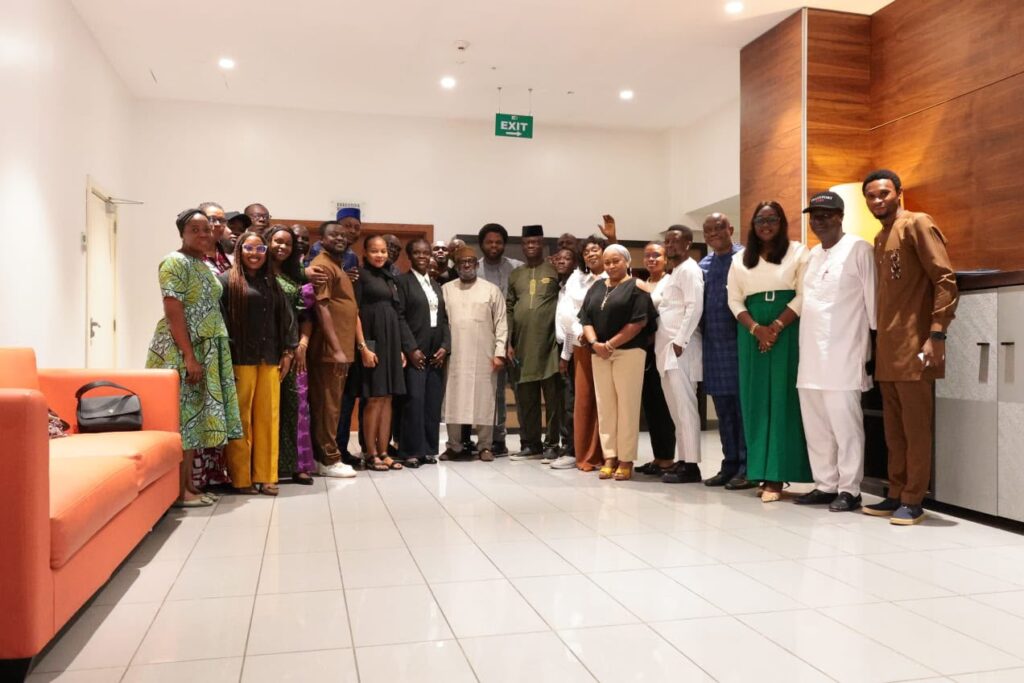
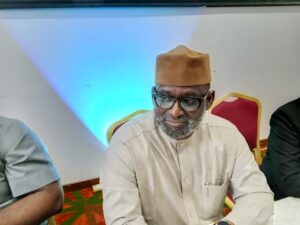
“The vision was simple,” Ahmed told journalists at a recent NSML media parley in Lagos.
“Nigeria is a maritime nation, then we must have the capacity to develop our own people to compete globally, right here at home. The MCOE is our answer to that.”
*Building the Centre, Brick by Brick*
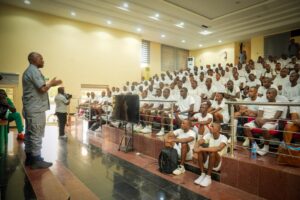
The Maritime Centre of Excellence on Bonny Island was conceived as more than a classroom block. Ahmed pushed NSML to invest in state-of-the-art simulators, bridge and engine-room models, and infrastructure designed to meet the strictest international benchmarks. The goal was accreditation that would be recognized by flag states, ship owners, and offshore operators worldwide.
The payoff has been tangible. The centre is now fully accredited by DNV under ISO 9001:2015 for Quality Management Systems, and holds DNV-ST-0029 certifications for Maritime Simulator Centres and Maritime Training Centres. It is licensed by the UK Nautical Institute to deliver Dynamic Positioning programmes — the same courses that offshore vessel operators demand before hiring.
“That certification matters,” Ahmed said.
“It tells the world that a Nigerian cadet trained in Bonny can walk onto a DP vessel anywhere and perform to standard. That is how you break dependence on foreign training.”
*From Classroom to Ship*
The MD’s focus has been practical: close the gap between theory and sea-time. Through the Seafarers Continuous Development Programme, NSML has placed hundreds of cadets on vessels under its management, giving them the practical experience regulators require before issuing Certificates of Competency.
For Ahmed, that pipeline is the point.
“Training without sea-time is incomplete,” he noted. “So we built the link. We train them, we test them on simulators, and then we give them real ship experience. That is how you produce a seafarer, not just a certificate holder.”
*Why It Matters Now*
Industry observers say the MCOE’s rise comes at a critical moment. Global shipping faces a shortage of qualified officers, while Nigeria’s blue economy ambitions — from port operations to offshore energy — depend on skilled manpower. By anchoring training capacity in Bonny, NSML is reducing forex outflow, creating jobs, and giving Nigerian youth a direct path to international maritime careers.
Ahmed frames it as national strategy, not just corporate investment.
“This is about sovereignty,” he said. “If we control the training, we control the quality. If we control the quality, Nigerian seafarers will be competitive anywhere in the world.”
*Raising the Bar*
Even with the certifications secured, Ahmed insists the work is not finished. Plans are underway to expand the MCOE’s capacity, introduce new courses in emerging maritime technologies, and deepen partnerships with international maritime organisations.
“The ambition is bigger than Bonny,” Ahmed said. “We want to build a maritime institution that Nigeria is proud of and that the global industry respects. That is the standard we are chasing.”
From Bonny Island to the world’s shipping lanes, that standard is now being set .