

NPA Records 24.8% Cargo Growth as Nigeria’s Merchandise Trade hits N41.4trn in Q2 2026

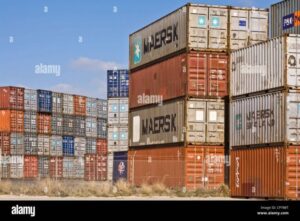
NPA Records 24.8% Cargo Growth as Nigeria’s Merchandise Trade Hits ₦41.4trn in Q2 2026
By Babatunde Aremu
The Nigerian Ports Authority (NPA) has recorded a 24.8 per cent increase in cargo throughput across the nation’s seaports in 2025, while Nigeria’s total merchandise trade rose to ₦41.4 trillion in the second quarter of 2026.
The development underscores the growing importance of the maritime sector to Nigeria’s economic performance, particularly in facilitating international trade, cargo movement and industrial activities.
According to the NPA, cargo throughput rose from 103.6 million metric tonnes in 2024 to 129.3 million metric tonnes in 2025, reflecting increased port utilisation and expanding cargo-handling activities.
The upward trend continued in the first half of 2026, when cargo throughput increased by 12.2 per cent to 68.2 million metric tonnes, compared with 60.8 million metric tonnes recorded during the corresponding period of 2025.
The figures were disclosed by the General Manager, Corporate Affairs Division of the NPA, Mr Ikechukwu Onyemekara, during a two-day Data-Driven Business and Maritime Reporting Training organised in partnership with the Premium Times Training Academy in Ikeja, Lagos.
Onyemekara said Nigeria’s merchandise trade value of ₦41.4 trillion in Q2 2026, representing a 5.6 per cent increase over the corresponding period of 2025, demonstrated the strong connection between port operations and national economic performance.
He explained that efficient port operations have far-reaching implications for manufacturers, exporters, importers, consumers and investors, noting that operational delays and bottlenecks increase the cost of doing business and ultimately impact commodity prices.
The NPA spokesman further disclosed that Nigerian ports received 2,300 ships in the first half of 2026, compared with 2,152 vessels during the corresponding period of 2025.
He added that outward cargo accounted for 41.9 per cent of total throughput in the second quarter, an indication of improved export activity.
Onyemekara urged maritime journalists to go beyond reporting headline figures and investigate the underlying factors shaping developments in the industry.
He cited the Lekki Deep Sea Port, which handled nearly 40 per cent of cargo throughput across Nigerian ports in the first half of 2026, as an example of how major industrial investments are transforming the nation’s port landscape.
According to him, more than three-quarters of Lekki Port’s cargo traffic was linked to refinery operations, highlighting the importance of examining cargo composition to understand emerging trade patterns.
Speaking on the Authority’s reform agenda, Onyemekara said the NPA was pursuing port modernisation, digitalisation, export facilitation and sustainability initiatives to enhance operational efficiency and strengthen Nigeria’s competitiveness in international trade.
He disclosed that the Federal Government had secured £746 million in UK-backed financing for the modernisation of Apapa and Tin Can Island ports, while rehabilitation works were ongoing at Onne, Warri and Calabar ports.
He also identified the National Single Window, Port Community System and Eto electronic truck call-up platform as major initiatives designed to streamline documentation, reduce operational delays and improve cargo movement across the nation’s port system.
The NPA spokesman challenged maritime journalists to uphold professional standards through rigorous fact-checking, consultation of primary sources, comparison of figures across corresponding periods and provision of opportunities for relevant institutions to respond before publication.
“We do not ask you for praise; we ask for accuracy. Where we fall short, report it. Where we make progress, report that too, with the same discipline,” he said.
He maintained that credible, evidence-based maritime journalism remained essential to strengthening institutional accountability, enriching public discourse and building confidence in Nigeria’s ports and trade environment.